
Our businesses never intended to be banks either
By Mel Curwood. More than 25 years working across New Zealand business, and nearly a decade helping trades, contractors and blue-collar businesses get paid in full, on time, every time. Over 350 of them.
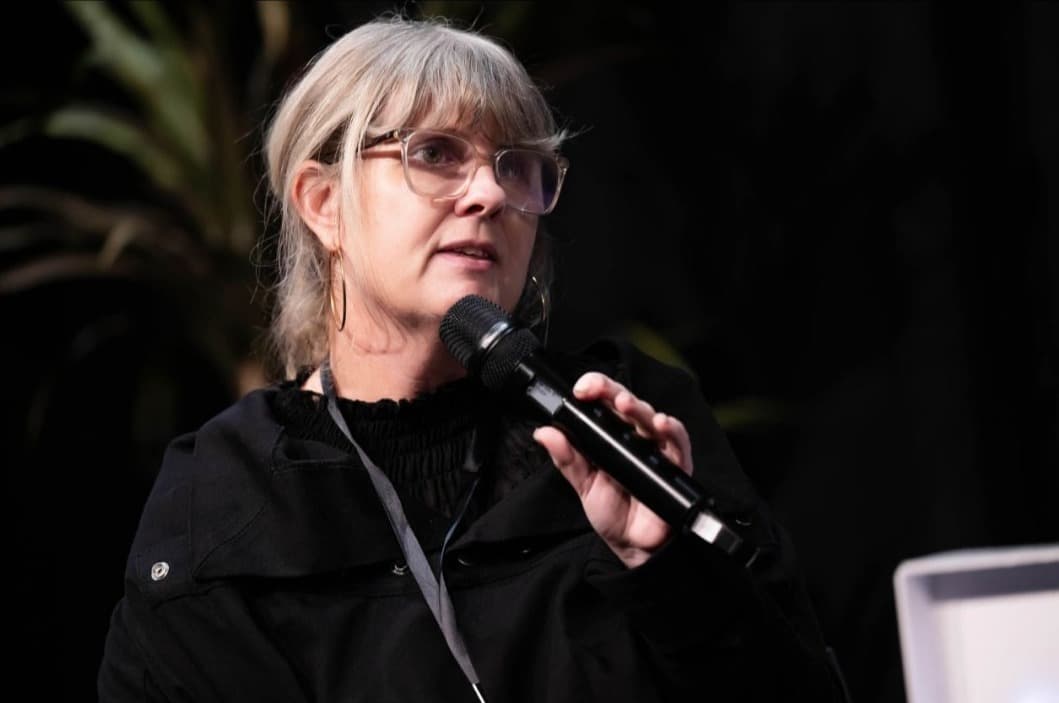
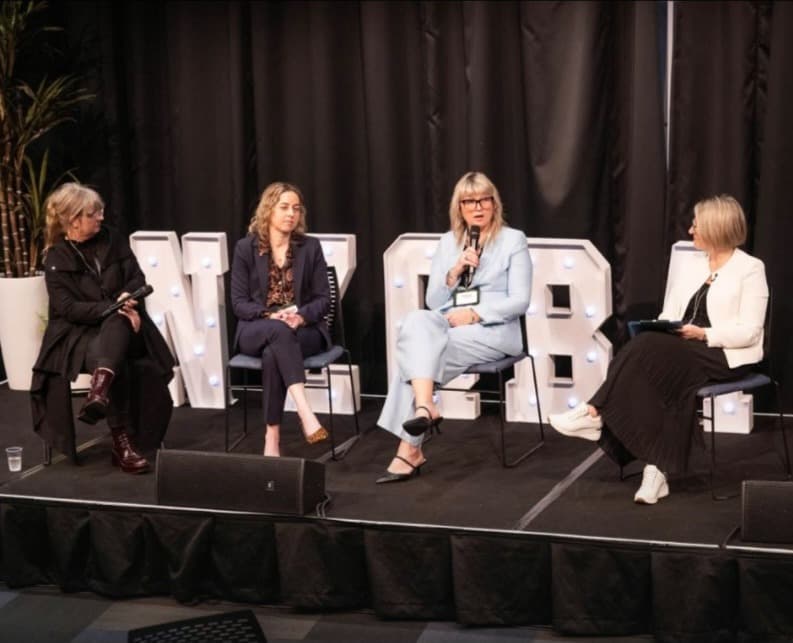
I recently took part in a panel discussion with the New Zealand Qualified Bookkeepers Association, alongside Tracey from Inland Revenue.
Before the panel, we had a thoughtful conversation about tax debt and the pressure Inland Revenue faces when businesses hold onto money that should ultimately be paid to the government. Their position was understandable: Inland Revenue was never intended to operate as a bank. Some of the money businesses collect or deduct is not really theirs to keep, and when it is not passed on, Inland Revenue effectively ends up funding that business.
But as I listened, I found myself thinking:
Our businesses never intended to be banks either.
Every day, small and medium-sized businesses, particularly blue-collar businesses, are expected to fund wages, materials, vehicles, fuel, subcontractors and the delivery of entire projects, and then wait 30, 60 or even 90 days to be paid.
They have already done the work. They have already carried the cost. Yet the money they have earned remains sitting somewhere else.
Inland Revenue can see a great deal of what is happening financially within a business. It has established collection powers, can charge interest and penalties, and may hold preferential status for certain tax debts if a company fails.
The ordinary business waiting to be paid has nothing like that level of visibility or protection. It may not even know that its customer is struggling until the payments stop altogether. By then, the business may already have funded weeks or months of work, and if the customer fails, it may recover little or nothing.
An uncomfortable contradiction.
On one hand, a business that cannot pay its tax on time can be viewed as a poor operator and told that Inland Revenue is not there to provide free finance.
On the other hand, that same business may be providing substantial amounts of free finance to its own customers, simply because long payment terms and slow payment have become accepted as normal.
There is another layer to this.
In 2023, Parliament passed the Business Payment Practices Act 2023. It would have required large entities, those with turnover above roughly $33 million, to disclose how long they actually took to pay their suppliers, on a public register.
It never came into force. It was repealed by the Business Payment Practices Act Repeal Act 2024, passed under urgency in March 2024. MBIE’s account of the repeal is here. No reporting ever started.
So we are asking small businesses to meet their obligations to the government promptly, while choosing not to create equivalent transparency around the large organisations that may be withholding those businesses’ revenue for 60 or 90 days.
This is not an argument against paying tax.
It is an argument that we cannot examine tax debt honestly without also examining what is happening upstream.
If we do not want Inland Revenue being used as a bank, we must also ask why New Zealand’s small businesses are routinely expected to operate as banks for everyone else.
Perhaps the real question is not simply:
Why hasn’t this business paid Inland Revenue?
Perhaps we also need to ask:
Who hasn’t paid this business, and how much of the financial pressure sitting inside it began somewhere further up the chain?
If you recognised your own business somewhere in that, the practical version of this argument is over here: what to do when you are not being paid for work you have done.