
Beyond resilience. Into agency, into growth.
Get paid in full. Get paid faster. Keep more control of the money you earn.
Paid Right NZ helps blue-collar and hands-on businesses build the cash flow, credit control and commercial infrastructure that protects earned revenue, reduces unnecessary risk and gets money back into the business faster.
Founded by Mel Curwood, working with businesses across New Zealand.

An idea whose time has come.
New Zealand's hands-on businesses have come through an incredibly difficult few years. The ones still standing were asked to be resilient and to hold on, and they did. Many are busy again. Now it's time to move beyond resilience, into agency, into growth, and into a new possibility for these businesses.
For a blue-collar business, wealth is agency, choice and excitement for the future. It's having the resources to choose: to grow what you already have and maximise your profit, to grow what you offer, to reinvest in your people, your assets and your fleet. It's knowing where the business stands, making decisions earlier, and having the business support the life, family, team and community around it, reliably.
Imagine




That's what we mean by access: to your own money, sooner, and to the choices it opens up.
Where the wealth is sitting
A great deal of that wealth has already been earned. It's sitting in the gap between doing the work and getting paid. When the structure underneath a business means the money flows back in full, on time, every time, that opportunity comes back into the business, where you can use it.
Go deeper
How the work is done
Paid Right NZ looks at how money moves into and through your business, where risk sits, where control is being given away, and where earned revenue is slowing down.
Then we strengthen the infrastructure around it.
- Foundations
- We find where the pressure is really coming from, where money is getting stuck and where risk is sitting.
- Infrastructure
- We strengthen the commercial decision points, payment structures, roles and tools that protect your cash flow.
- Implementation
- We turn it into action, so money moves faster and more consistently into the business and the changes hold.
Value delivered is not the same as money available.
The closer we can bring those two together, the more choice the business keeps.
Where getting paid is actually decided
Risk enters a job long before an invoice does.
By the time an account is overdue, much of what determines how quickly and how fully you get paid has already happened.
It starts with decisions like:
- who you choose to do business with and what you know about them
- what has been agreed, by whom, and on what payment structure
- deposits, staged payments, purchase orders and variations
- who has authority and where responsibility sits
- how quickly work becomes an invoice, claim or payment request
- what happens when payment slows, changes or is disputed
- where security, including the PPSR, should sit
Winning work is a skill.
Getting paid for it, fully and reliably, is a system.
Most businesses have built the first one with real care. Far fewer have built the second one with the same level of strategy.
That is where a lot of unnecessary exposure, delay and frustration begins.
The principles stay the same. The complexity changes.
In a smaller business, one or two people may carry most of the transaction from quote to payment.
In a larger or multi-site business, that same journey may move through sales, operations, project teams, procurement, accounts, managers and customers across multiple locations.
Every handover is another place where information, authority, responsibility or money can slow down.
Whether the numbers are $5,000, $50,000 or $500,000+, the work is still to understand where risk sits, how much control the business keeps, and how quickly earned revenue becomes money available.
The size changes. The commercial principles do not.
What this can look like in practice
A heavy diesel engineer and mechanic. A strong business carrying $425,000 outstanding when the work started.
By September 2026, that had reduced to under $50,000, with one complex account still being resolved.
One of the biggest shifts for the owner was recognising how much agency had been given away without realising it.
A $350,000 project in the building sector. Instead of carrying the whole project and hoping payment followed, the business secured a $125,000 prepayment toward materials before starting.
The project was paid in full.
Mel and the team have worked with more than 350 New Zealand businesses.
Founder led. Experience led. Team delivered.

Businesses get paid properly, cash moves more freely and fairly, and owners can build strong, profitable, values-aligned businesses, and lives, on their own terms.
Paid Right NZ was founded by Mel Curwood after nearly a decade working directly alongside New Zealand businesses on credit control, cash flow and commercial risk.
Her wider business experience spans more than 25 years, from Bank of New Zealand, GE and Fonterra through to owner-operated and hands-on businesses.
Paid Right NZ brings that experience into one specialist area: how a business protects the money it earns, reduces the risk it carries, and gets earned revenue back into the business faster.
Mel remains the founder and specialist behind Paid Right NZ, supported by Area Managers working with businesses in their regions across New Zealand.
Our training programmes are registered services within the Regional Business Partner Network, listed under our registered name, Business Partners Inc Limited.
What could your own revenue be doing for you?
If every dollar your business is owed right now were paid today, what would you do with it?
- The vehicle.
- The equipment that has been sitting on the list.
- The next person or crew.
- Paying down debt.
- Taking pressure off the overdraft.
- Opening another site.
- Investing in growth.
- Taking drawings without wondering what is still sitting outside the business.
- Making the next commercial decision from a stronger cash position.
The money sitting outside your business already has a job to do.
Better cash flow changes what you can decide, when you can decide it, and how much choice you have over what happens next.
That is the bigger picture behind Paid Right NZ.
More agency over your revenue.
More control over the commercial decisions that shape how and when you get paid.
And faster access to the money your business has already worked for.
Start with your business
A first conversation takes around fifteen minutes.
We will ask how work moves through your business, how payment is structured, where money tends to slow down and what is happening now.
From there, we can see whether there is something worth looking at more closely and which way of working, if any, makes sense.
Tell us what is happening in your business
or ring 0800 968 783, Monday to Friday, during normal business hours
If one of our Area Managers has already booked a time with you, there is nothing else you need to do.
That conversation starts with your business.
Three ways to work with us
Paid Right Session
For when something specific is happening now.
A customer has not paid. A project has gone sideways. There is a dispute, a liquidation, or a commercial decision in front of you and you want an experienced view before you move.
Paid Right Accelerator
For business owners and leaders who want to strengthen the way they get paid alongside others dealing with many of the same commercial realities.
Practical, facilitated peer learning that turns the principles into decisions, tools and changes inside your own business.
Paid Right Capability Intensive
For businesses that want to go deeper into their own operation.
We work with the owner, leadership team and the key people involved in the transaction journey to identify where money, risk and responsibility are getting stuck, then build the infrastructure into the way the business already operates.
None of these is more advanced than the others.
They are different ways of doing the work, depending on what is happening in the business, the level of complexity involved and how you want to work. See them side by side.
If your situation does not sit neatly inside one of these, tell us what you are dealing with and we will work out what makes sense from there.
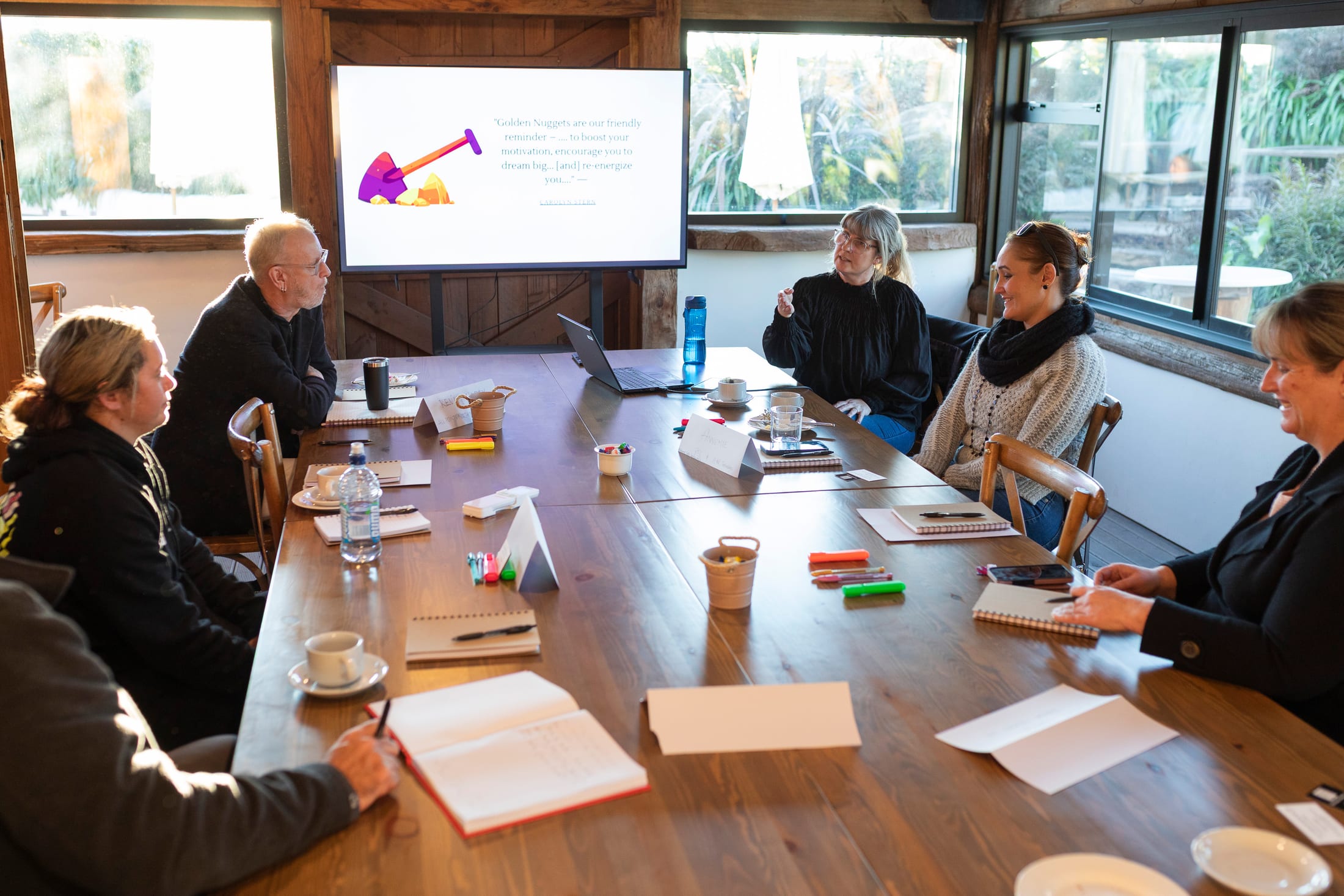
When blue-collar, trades and hands-on businesses are strong, everybody wins.



You already have the capability. You've proven it.
What we build together is the infrastructure that matches it, and we'd love you to be part of it.